The Blind Shutdown: What the fairlife Ransomware Attack Reveals About the OT Decision Support Void
When ransomware strikes a global brand, leadership is faced with a binary choice: keep the production lines running and risk the attack spreading or pull the plug and suffer immediate operational losses.
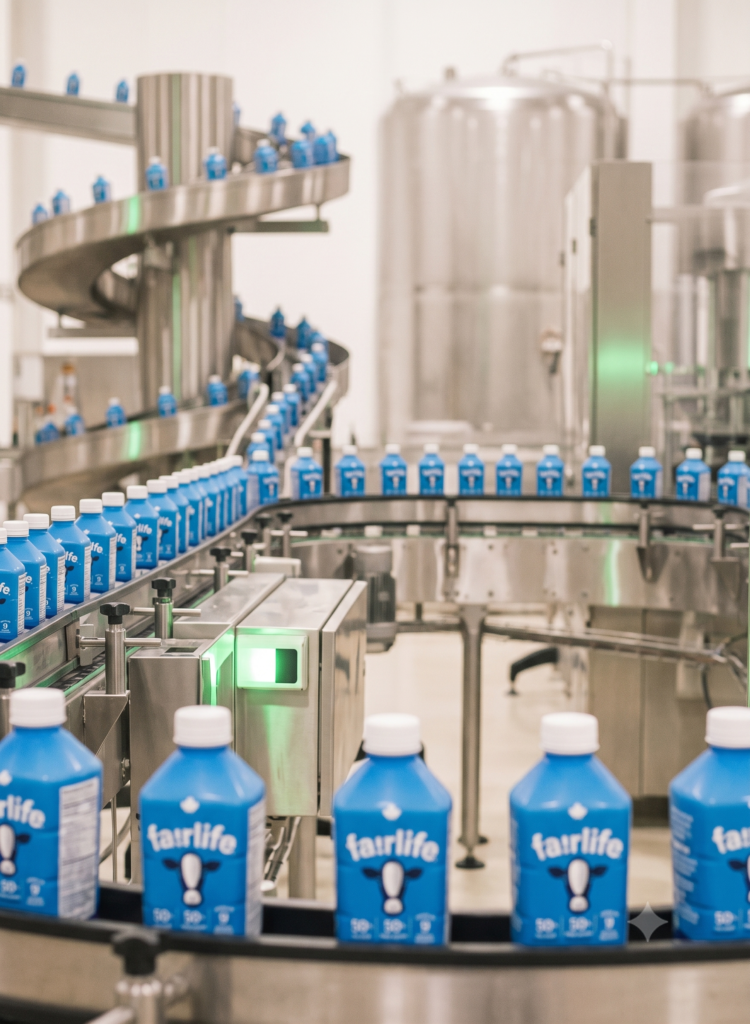
The July 16, 2026, ransomware disclosure by The Coca-Cola Company at its dairy subsidiary, fairlife, illustrates this dilemma. According to the 8-K filings, the company “identified unauthorized access by a third party to a portion of its systems, including its production-related systems, in connection with a ransomware event.”
The company has indicated that product quality and safety were unaffected and has not yet disclosed whether there was any compromise of its physical processes.
Although not all details of this attack have been exposed, the incident fits the pattern of a precautionary shutdown and the lack of decision-making tools after exposure of a potential breach. This is one of the biggest (and most expensive) challenges in OT cybersecurity and one that can be addressed with Process Oriented OT Cybersecurity.
The Anatomy of a Panic Shutdown
In fast-moving ransomware events, a familiar pattern emerges:
The Breach: Malicious activity or active encryption is detected on corporate networks or systems tightly integrated with production logistics.
The Information Vacuum: Neither operational nor cybersecurity teams can verify if the OT networks – the actual PLCs, SCADA systems, and physical machinery – have been compromised or if they are still safe.
The Nuclear Option: Out of an abundance of caution and a lack of granular visibility, leadership slams the emergency shutdown button on the physical plants to achieve “proactive containment.”
Coca-Cola’s SEC Form 8-K filing openly admits this blind spot that while U.S. production was halted, “the full scope, nature and impacts of the incident are not yet known.”
They had to halt operations first and ask questions later. They chose the guaranteed financial bleeding of a manual shutdown over the unknown risk of an actively manipulated process.
Why Traditional OT Security Fails the “Decision Support” Test
Most OT security tools act as passive network monitors. They parse packet traffic, analyze standard IT/OT protocols, and issue alerts when things look anomalous.
During an active ransomware crisis, the presence of an alert itself does not help an executive or a plant manager answer the single most critical operational question: “Are our physical processes actually being manipulated right now, or is this just an isolated IT network infection?”
Because traditional tools rely entirely on the digital networks that are currently under attack, they can’t validate the actual physical reality on the plant floor. They offer zero decision support, leaving executives to assume the absolute worst-case scenario.
The Cost of the Void in Manufacturing
Without verification of whether production processes are exhibiting normal behaviour, “containment” becomes incredibly expensive. For a brand like fairlife, halting continuous pasteurization, processing, and distribution strains grocery supply chains and instantly burns revenue.
At the same time, continuing operations when physical processes – or the digital rules governing those processes – are potentially compromised introduces an unacceptable layer of risk, threatening physical assets, operational integrity, and public safety.
Out-of-Band Process Verification as Crisis Decision Support
Process-Oriented OT Cybersecurity fundamentally alters the incident response playbook.
Instead of parsing network traffic or monitoring protocol packets – both of which depend on the very digital infrastructure that ransomware targets – SIGA operates completely out-of-band. By capturing raw electrical signals directly from physical sensors and actuators (Level 0 of the Purdue Model) before that data is converted into digital packets, SIGA creates an immutable parallel data stream.
During an active ransomware crisis, this architecture transforms executive decision-making from a blind gamble into a calculated operational strategy:
-
Total Network Isolation: Because SIGA taps electrical signals at the physics layer, it does not rely on the IT or OT networks. Even if the corporate ERP is encrypted, the SCADA network goes dark, and the HMI screens freeze, SIGA’s data remains live, unverified, and untamperable.
-
Physics as the Ultimate Source of Truth: Cybercriminals can spoof network packets or manipulate PLC software to show fake “normal” operations, but they cannot rewrite the laws of physics. If a pump is overheating or a valve is open, the electrical signal reflects that reality instantly.
-
Defeating Operational Blindness: Instead of executing a nuclear shutdown out of fear, leadership receives real-time validation of the actual physical process.
True decision support means having the empirical confidence to state: “The IT network is compromised, but our physical production loop is verified normal at Level 0. Isolate the digital networks, keep the lines running, and do not shut down the plant.”
A Strategic Baseline for Global Brands
The fairlife incident is a reminder of the reality on today’s manufacturing floor: when a breach occurs, the clock is ticking down to a multi-million dollar decision. In this environment, relying on traditional network alerts as “decision support” is the equivalent of flying blind.
Moving forward, the benchmark for true OT resilience cannot simply be how well a company defends its perimeter, but how effectively it can validate its physical reality when that perimeter fails. By anchoring security in the unalterable physics of Level 0 electrical signals, Process-Oriented OT Cybersecurity flips the script on attackers. It gives leadership the one asset they lack during a fast-moving ransomware event: time.
Until global operators bridge this visibility gap, ransomware actors don’t even need to touch a PLC to paralyze a factory – the victim’s own operational blindness will do it for them.
By securing the physical ground truth, industrial enterprises can finally stop treating every IT breach like an operational death sentence.