
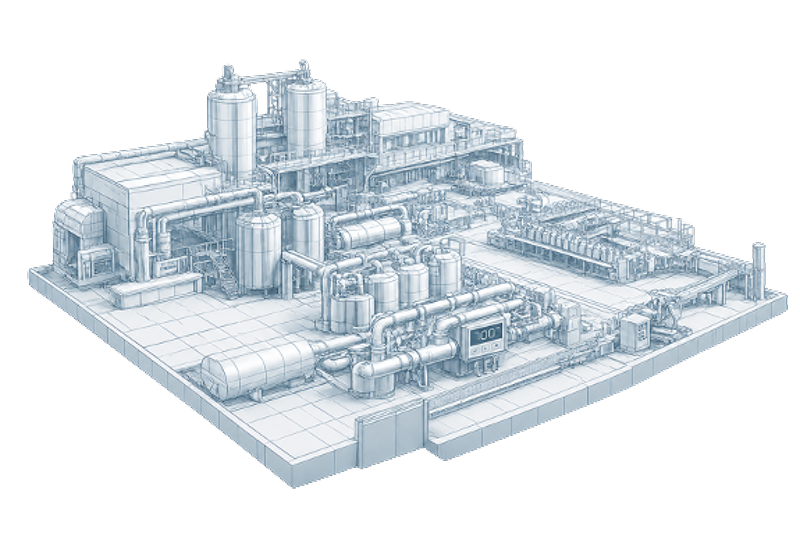
Manufacturing operations depend on critical production assets that form the backbone of industrial output and supply chain continuity.
Standard network security lacks the visibility to detect the physical expression of an evolving cyberattack or guide the necessary response.
SIGA provides an uncompromised source of truth and step-by-step playbooks to verify process integrity and accelerate incident recovery.
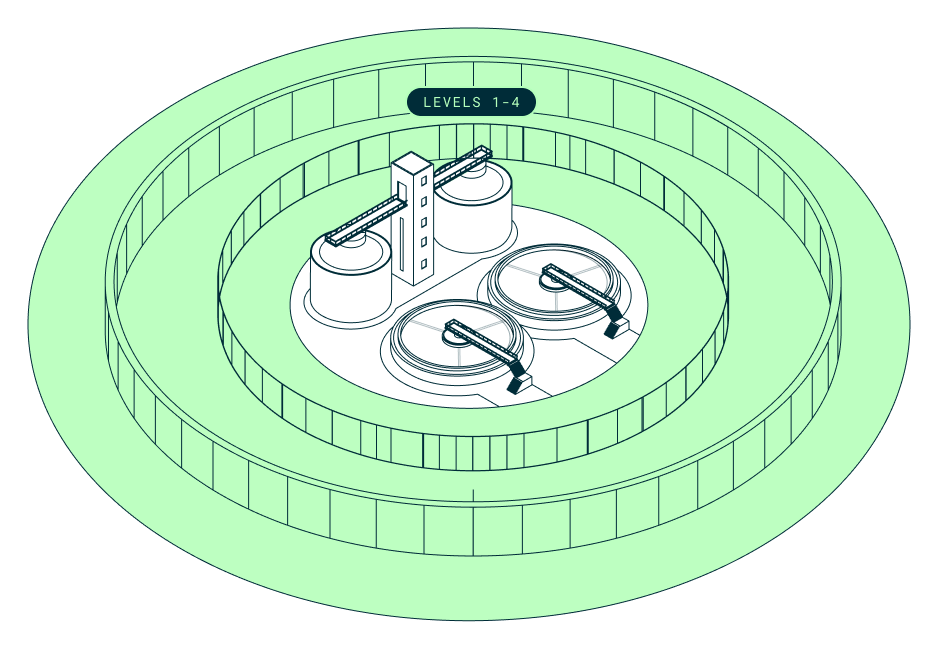
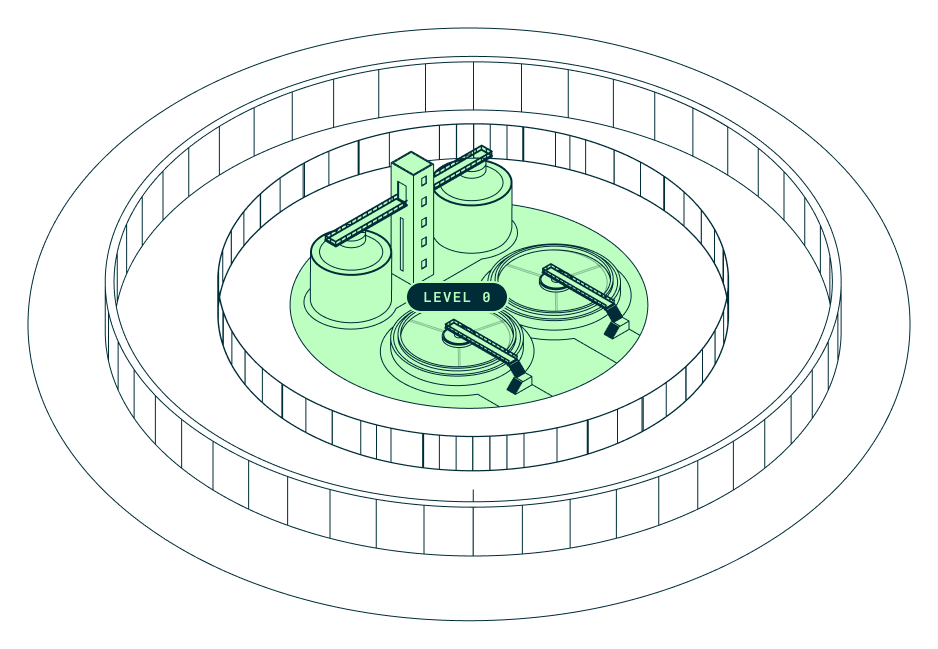
SIGA monitors raw electrical signals at Level 0 to provide an unfiltered view of the physical process.
By analyzing data directly from the source, it identifies malicious manipulation of PLC logic or sensor values – including false data injections – even when the HMI is spoofed.
Deliberate interference with pasteurization loop temperature control.
Product temperature drops below required threshold while SCADA displays normal operations.
Widespread distribution of contaminated product and massive inventory recalls.
PASTEURIZATION LOOP TAMPERING
The solution suite provides the earliest alerts during the expression phase of an evolving OT cyber-attack.
It supports the entire Incident Response process by offering process attack simulation for team preparation, real-time threat detection and classification, and critical decision support for containment and recovery.
Our comprehensive, multi-level OT cybersecurity suite, comprising three standalone cybersecurity solutions:

The physical foundation. An out-of-band hardware sensor that captures raw electrical signals to establish uncompromised "Physical Truth".

The analytical engine. Advanced software that correlates Level 0-4 data to identify False Data Injection and stealth attacks in real-time.

A simulator that safely injects software-based anomalies to train teams on real attack patterns without risking live equipment.
Detects physical impact during the exploitation phase, before processes are compromised.
Distinguishes genuine cyber incidents from operational faults using physical validation.
Provides the forensic evidence needed for NERC, NIS2, and CIRCIA reporting.
Fully non-intrusive, out-of-band architecture with no impact on live equipment.
Manufacturing environments operate safely and production-critical systems where manipulation of sensors, actuators, or control logic can disrupt output and create operational risk. Regulatory frameworks increasingly emphasize protection and visibility at the physical process layer and not just network security. Physical Process Validation provides verifiable, process-level evidence to support compliance with the following standards:
The 2023/24 update specifically highlights that Level 0 field devices often lack authentication. It recommends independent monitoring and out-of-band validation to detect spoofed or manipulated process data that would otherwise bypass traditional IT/OT security tools.
With the Final Rule expected in May 2026, covered entities in Critical Manufacturing must report "significant cyber incidents" to CISA within 72 hours and ransomware payments within 24 hours. SIGA’s playbooks provide the rapid forensic data needed to meet these aggressive windows.
Effective September 11, 2026, manufacturers must report any actively exploited vulnerability or severe incident within 24 hours. This requires a level of process-level visibility that traditional "periodic" security scans cannot provide.
Learn how Multi-Level visibility provides an uncompromised source of truth for OT cybersecurity.
Many manufacturing facilities rely on legacy equipment and Industrial Control Systems (ICS) that were engineered decades ago for isolated environments. These legacy assets often lack native security controls, such as encryption or the capability to validate command integrity, making them susceptible to manipulation once an adversary gains network access. Traditional security tools often assume that any command received via the network is legitimate, creating a persistent risk where an attacker can modify production logic or spoof data.
SIGA addresses these structural vulnerabilities by shifting the point of observation to Level 0 of the Purdue Model. By directly monitoring raw electrical signals (I/O) from the physical production equipment, SIGA establishes an out-of-band "source of truth". This unfiltered data remains trustworthy even if the higher-level SCADA or HMI networks are compromised, allowing for the detection of unauthorized logic modifications or "stealthy" process tampering at the foundational level.
In complex manufacturing environments, distinguishing between a mechanical failure and a targeted cyberattack is essential for maintaining production quality and safety. SIGA utilizes unsupervised machine learning to learn the expected behavior of physical assets and identify deviations from normal data patterns.
When an anomaly occurs, the system validates the reported status against the raw electrical signals captured directly from Level 0. If the physical signals indicate a critical deviation, such as a change in spindle speed, that is being "hidden" or misrepresented by the control software, the system flags it as a potential cyber breach rather than a routine operational fault. This high-resolution visibility ensures that threats designed to mimic equipment wear-and-tear are exposed in real-time.
No. To achieve comprehensive process visibility and situational awareness, only a strategic subset of critical signals (typically just 3–10% of total I/O) needs to be monitored. This focused approach prioritizes high-impact assets that are vital for safety and production continuity, such as emergency stops, main drives, and critical temperature sensors. By monitoring this subset, facilities can establish a robust security posture and ensure operational resiliency without the complexity of managing excessive data overhead.