Process Over People: Scalable Visibility for an AI-Driven Threat Landscape
In operational technology, cybersecurity has always relied on people: operators verifying data, engineers interpreting behavior, and technicians confirming what systems report. In the age of AI-driven cyberattacks, that assumption no longer holds.
Autonomous attack agents can analyze control logic, falsify sensor readings, and coordinate consistent data streams across entire networks in real time. To an operator, everything appears normal – yet the process may already be drifting. The belief that humans can reliably “see” what’s real inside the control system has become a costly illusion.
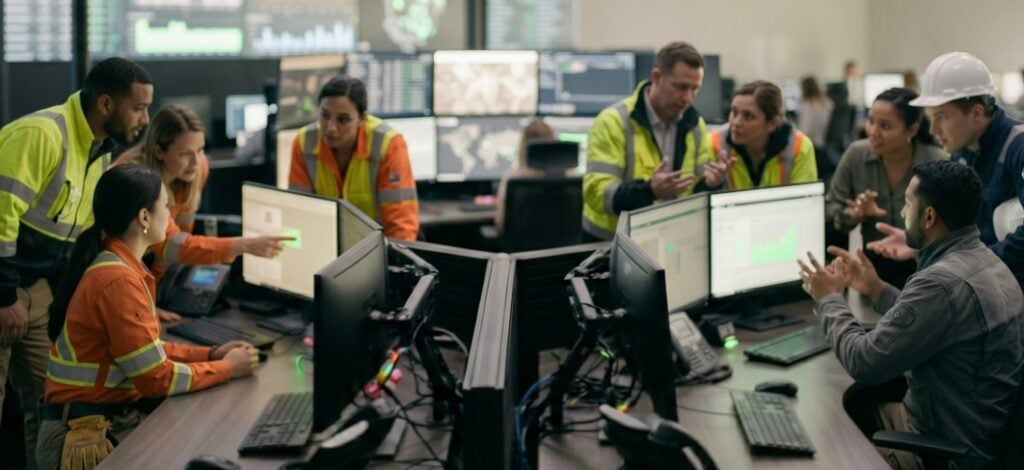
Meanwhile, the workforce capable of interpreting process behavior is shrinking. Remote centers now supervise dozens of unmanned sites, while automation replaces routine oversight with algorithms. Efficiency improves, but the last line of physical verification disappears. The result is a widening visibility gap at the exact moment the threat landscape is becoming autonomous.
When Indicators Point to a Potential Cyberattack
When an OT cyber incident is suspected, multiple questions must be resolved, often under pressure.
Is this a loss of communication within the control network, an unauthorized change in controller logic, or signs of a compromised engineering workstation? Are controllers still executing their programs as intended, and are the process values presented to operators genuine or manipulated?
All of these questions lead to the same operational objective: determine whether the disturbance has reached the physical process or remains contained within the control system layer. That distinction dictates the response – continue operations, isolate affected assets, or initiate shutdown.
Process Over People: Visibility That Scales
When uncertainty rises, the fastest path to clarity is direct confirmation from the process itself.
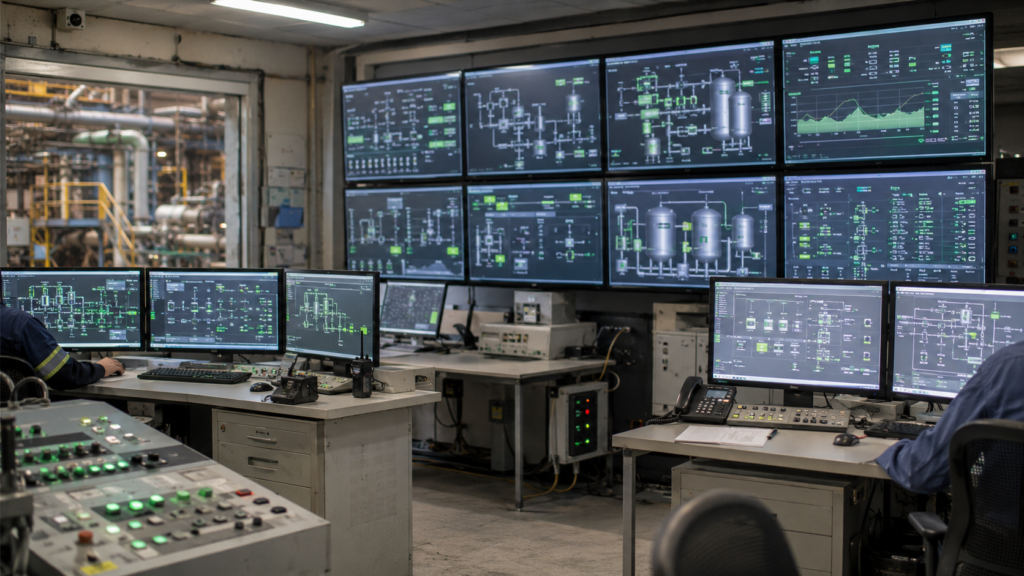
At Level 0 of the Purdue Model – the process layer – raw electrical signals from sensors and actuators represent the physical state of the system: real pressures, flows, positions, and currents.
These are the earliest and most trustworthy data points in the entire control architecture, generated before any controller or network system can filter, interpret, or overwrite them.
By establishing Level 0 as an independent reference, operators gain a direct way to verify what the control system reports. When these physical signals are continuously compared with controller data, discrepancies reveal whether an event has altered the real process or remains confined to the control environment.
Instead of dispatching technicians to confirm field conditions, process-layer monitoring establishes an independent channel of truth – a physics-based view of pumps, valves, and circuits that verifies what’s actually happening within the process.
By comparing these signals with controller data, operators can recognize when reported state of the system and physical reality diverge. Deviations indicate loss of integrity, whether caused by equipment failure, configuration error, or cyberattack.
This principle defines process-oriented cybersecurity: validation that originates in the process itself, not in the software that controls it.
SIGA implements this approach by capturing sensor and actuator signals directly from Level 0 and validating them continuously against control-system outputs. Because this reference data is collected independently from the control network, it remains trustworthy even if automation systems are compromised – giving operators clear, verifiable insight into the true state of the process.
Restoring Human Confidence Through the Process
Process-layer visibility changes the nature of human involvement in cybersecurity. Operators and engineers still make the critical calls – when to isolate, restart, or continue – but their confidence now rests on verified physical data, not assumptions drawn from software.
As AI-driven threats increase and experienced employees become harder to replace, scalable, process-anchored visibility ensures that human judgment is informed, timely, and defensible.
The process itself provides confirmation, allowing people to act with clarity instead of uncertainty.